
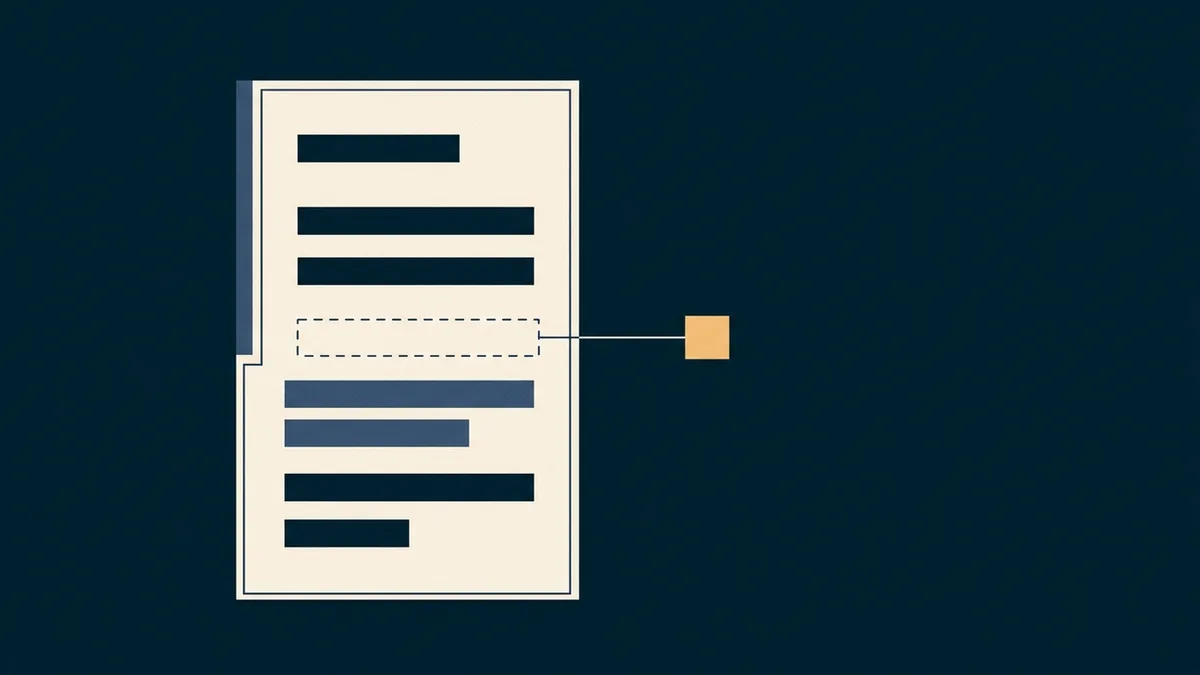
Wisconsin’s rule says only "the fee determined by the department under s. 448.07(2), Stats." The amount is set by department order rather than written into regulation, which is a deliberate structure and the reason the number is hard to find in law.
Wisconsin’s PA rule contains no fee. It contains a pointer to one, and the pointer is the interesting part.
What PA 2.01 actually says
"The fee determined by the department under s. 448.07(2), Stats." That is the whole of it. No amount, no schedule, no table.
DSPS currently publishes $75 for the initial application and $141 for renewal. Those are real numbers from the department, and they are not fixed in any regulation.
Three places fees live
Statute, where a legislature writes the amount into law. Minnesota does this at Minn. Stat. 147A.28, and its fees barely move as a result.
Administrative code, the common case. Florida at 64B8-30.019, Virginia at 18VAC85-50-35, Washington at WAC 246-918-990. Changing one requires rulemaking — notice, comment, adoption.
Or delegated, which is Wisconsin. The statute sets a framework and the department publishes a schedule it can revise on its own authority.
Why delegation is defensible
A department that must complete a rulemaking to adjust a fee cannot respond to its own costs. Delegation lets an agency fund its regulatory work without waiting on a legislative or rulemaking cycle.
The trade is transparency. There is no citation to point at, and the figure you find today may not be the figure next quarter.
Why this matters beyond Wisconsin
Arkansas does the same thing — "the required fee as delineated elsewhere." Louisiana’s licensure section names no amount. Arizona’s board publishes none at all. Michigan publishes a renewal fee and not an initial one.
That is why a genuinely honest per-state fee table covers about twenty states rather than fifty-one. For the rest, the number is not in law anywhere, by design.
What to do with a delegated fee
Get it from the department, in writing, shortly before you file rather than at the start of a months-long project. And treat any aggregator figure as unverified — spot checks against primary sources have found errors of several hundred percent, with stated totals that do not equal the sum of their own components.
What the total actually looks like
Add fingerprinting through the state vendor, NCCPA verification, primary source verification from every board that has ever licensed you, and transcripts sent directly by your program. For an applicant with three prior licenses those exceed the $75 application several times over.
Which is the deeper reason a fee table is a weak planning tool anywhere: the board fee is usually a minority of what a license costs, and the parts that are not the board fee are the same in every state.
Wisconsin is worth having
It is a compact member state, so a $75 application supports privileges across the whole membership from 2027. That is among the better value entries available, and it does not depend on pinning the fee to the dollar in advance.
Common questions
- How much is a Wisconsin PA license?
- DSPS publishes $75 for the initial application and $141 for renewal. Because the amount is set by department order rather than in rule, confirm it before filing.
- Why does Wisconsin not publish PA fees in its rules?
- Because s. 448.07(2) delegates fee-setting to the department. That lets DSPS revise the schedule to match its costs without going through rulemaking.
- Is Wisconsin in the PA compact?
- Yes. Wisconsin is a member state, so a Wisconsin license will support privileges in other member states once applications open.
- How do I find the current fee for any state?
- Go to the board or department directly. Aggregator sites publish confident figures for all fifty-one jurisdictions and spot checks against primary sources show substantial errors.
Need Help with Your Application?
We handle the PA licensure process end-to-end — eligibility screening, documents, board follow-ups, and tracking.