
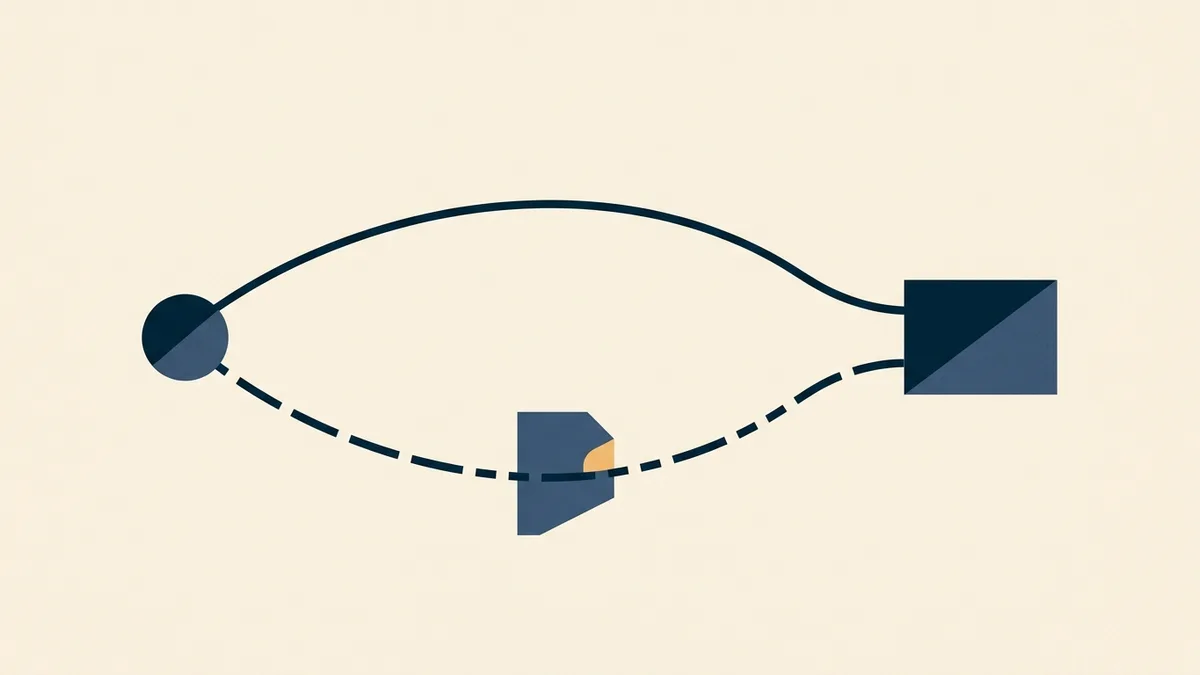
A transcript you forward yourself is usually not accepted. Boards require it sent directly by the program, which adds the program’s own processing time to your application — and nobody discovers the rule until the file is already sitting incomplete.
A small rule that quietly adds weeks, because almost nobody reads it until their file is already sitting open.
Why boards insist
The principle is primary source verification. A board wants evidence from the issuing institution, not from the applicant, because a document that passes through your hands is no longer proof of anything.
The same logic governs license verification and NCCPA verification. Transcripts are simply the version of it people trip over, because everyone has a PDF of their own transcript and it feels obviously sufficient.
What that costs in time
The request goes to a registrar, and registrars run at their own pace. Days at a responsive institution. Several weeks at a busy one, and longer in the periods around graduation and enrollment.
None of it is within your control once sent, which puts it in the same category as fingerprints: request early, then wait.
Three states means three requests
Each board needs its own copy, sent directly. So a multi-state application is multiple requests with multiple fees, and issuing them in one sitting rather than as each board asks is the difference between an afternoon and three months of reminders.
Closed programs
This is where it becomes genuinely difficult. PA programs consolidate and close, and when they do, records transfer to a designated custodian — often the sponsoring university’s registrar, sometimes a state archive.
Finding the custodian takes weeks if you start when a board asks. It takes an afternoon if you did it in advance. And it is worth remembering that your eligibility is unaffected: boards ask whether the program was ARC-PA accredited at the time your degree was conferred, so a later closure changes nothing about your qualification. It only changes how hard the paperwork is.
Check what the board actually wants
Some boards want the transcript sent to them; others accept a credentialing service. Some require it to name the degree conferred and the conferral date specifically, which matters because accreditation eligibility is assessed as of that date.
Read the instruction before placing the order. A transcript sent to the wrong address, or one that omits the conferral date, is a request you get to make twice.
Do it first, not when asked
Transcripts belong in the same opening batch as fingerprints and verification requests. All are outbound requests to third parties, none depend on each other, and every one of them is a wait you cannot shorten later.
The applications that run long are almost never the ones where something went wrong. They are the ones where each request was made only after the previous one came back.
Common questions
- Can I send my own transcript to a licensing board?
- Almost never. Boards require an official transcript sent directly by the institution, because a document that passes through your hands is no longer primary source evidence.
- How long does a transcript request take?
- Anywhere from days to several weeks depending on the registrar. It is entirely outside your control once requested, which is why it should be requested early.
- What if my PA program has closed?
- Records transfer to a designated custodian, often the sponsoring university’s registrar or a state archive. Finding that custodian takes weeks if you start when a board asks.
- Do I need a transcript for every state I apply to?
- Yes. Each board needs its own copy sent directly, so applying to three states means three separate requests and three fees.
Need Help with Your Application?
We handle the PA licensure process end-to-end — eligibility screening, documents, board follow-ups, and tracking.