
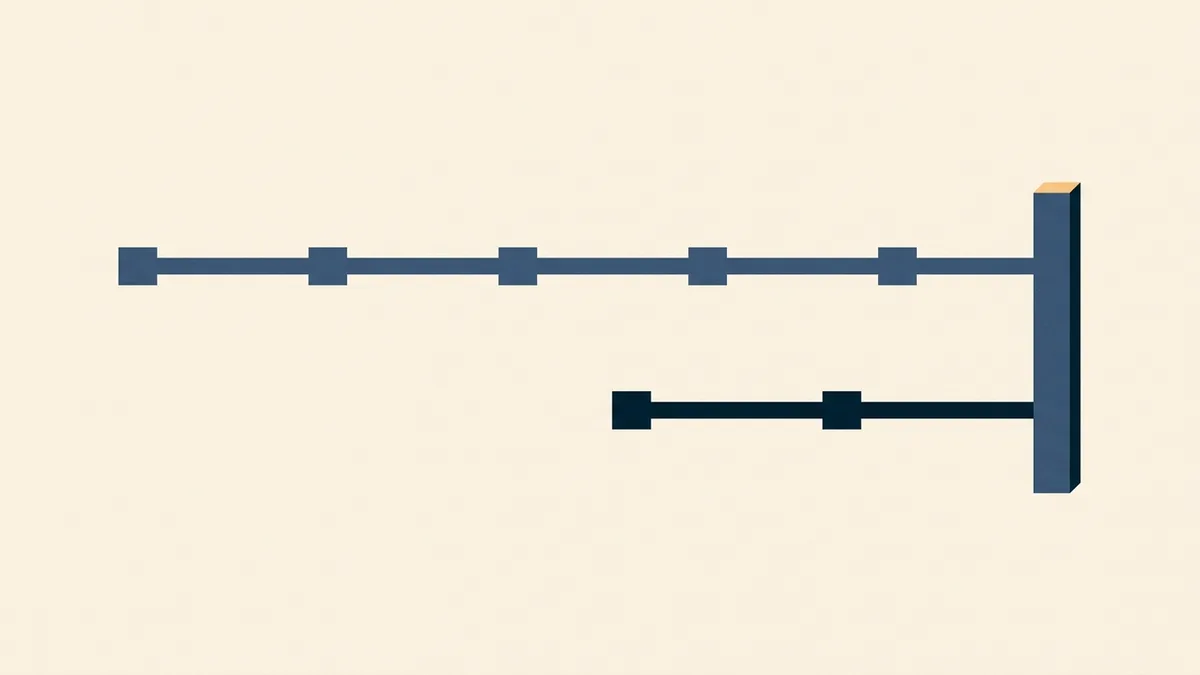
Endorsement lets a state rely on the license you already hold instead of re-examining your qualifications from scratch. It reduces paperwork and sometimes waives examination requirements. It rarely reduces the calendar, because the slow parts — fingerprinting, primary source verification, board meeting cycles — are identical either way.
If you already hold a license somewhere, some states offer a shorter route. Shorter in paperwork. Not always shorter in time, and that distinction costs people start dates.
What endorsement actually removes
Under a standard application, you document your eligibility from the ground up: education, examination, certification, everything. Under endorsement, the state leans on the fact that another board already did that work and issued a license on the strength of it.
In practice that can waive re-submission of program documentation, and occasionally an examination requirement. It is a genuine reduction in the volume of paper.
What endorsement does not remove
Fingerprinting and the state background check. Primary source verification of every license you have ever held. Board meeting cycles, where a board reviews files monthly. Transcript requests that must come from your program directly.
Those four items are most of the calendar. None of them care which pathway you filed under. Which is why an endorsement application that "should be quick" still lands at two to four months in most states.
Where it is genuinely worth it
Endorsement is most valuable when it waives an examination — a state jurisprudence exam with a validity window, say, or a re-examination requirement for someone whose certification is older.
It is also valuable simply as effort. Assembling a first-time file is a project. Assembling an endorsement file is an afternoon plus follow-up. That has real value even when the calendar is unchanged.
Where it quietly fails
Endorsement usually requires a current, unencumbered license and often a minimum period of recent active practice. A gap in practice, a lapsed license, or any disciplinary history tends to push the file back into the standard track — sometimes after you have already filed as endorsement, which costs weeks.
Check the eligibility criteria before choosing the pathway, not after. A rejected endorsement application is not usually converted; it is restarted.
Endorsement and the compact are not the same thing
Endorsement produces a license. A compact privilege does not — it is authority to practice resting on a license held elsewhere, and it disappears if that license does.
Once privileges open in 2027, the choice between them will be real, and it will turn on whether you want something permanent in the state or something that follows your home license. Until then, endorsement is the only version of "faster" that exists.
Common questions
- What is licensure by endorsement for PAs?
- A pathway where a state issues a license based on your existing license in another state, rather than requiring you to document eligibility from first principles. Requirements vary by state.
- Is endorsement faster than a regular application?
- Usually not much. It removes documentation steps, but background checks, primary source verification and board review run on the same schedule regardless of pathway.
- Is endorsement the same as reciprocity?
- No. Reciprocity implies automatic mutual recognition, which almost no state offers. Endorsement is still a full application that happens to accept your existing license as evidence.
- Do I qualify for endorsement?
- Typically you need a current, unencumbered license, current NCCPA certification, and in some states a minimum period of active practice. A disciplinary history usually pushes the file out of the endorsement track.
Need Help with Your Application?
We handle the PA licensure process end-to-end — eligibility screening, documents, board follow-ups, and tracking.